What Kobo's CEO Learned from Taking Customer Service Calls
Kobo's CEO took a customer service call and discovered his company had been building for the wrong audience. Here's what he learned.
By Eric Janssen
—
A man in his 80s calls customer support. He’s upset. A charge on his credit card was wrong, and he’s escalated from manager to manager until he finally gets the person at the top: Michael Tamblyn, CEO of Rakuten Kobo.
Tamblyn fixes the problem. But then, instead of hanging up, he gets curious.
How did you find us?
What are you using Kobo for?
What do you like most about it?
And the answer flipped how the company understood its core customers.
That call wasn’t just a customer service escalation. It was customer discovery call. And it exposed a hard truth most companies learn too late: your best customers often aren’t who you expect.
That call pushed the team at Kobo to take a second look at the customer and usage data.
That conversation pushed Kobo's team to revisit their data. What they found surprised them: In Canada and much of Western Europe, their biggest customer segment wasn't young, tech-savvy readers. It was people aged 55 to 75.
The company had been building for the wrong audience.
Three Layers of Customer Knowledge
Most companies talk about "knowing your customer" like it's one thing. Kobo's story reveals it's actually three distinct layers:
Who they are — Demographics and behavior patterns
Why they chose you — The problem they're actually solving
What they're trying to protect — What's really at stake for them
Each layer reveals something different. Miss any one, and you're building with incomplete information.
Layer 1: Who they are
When you start a company, it's almost inevitable that you build for people like you. You're the easiest "customer" to consult. You're right there. You know your preferences. Your assumptions feel like reality.
That's exactly what happened at Kobo. The early team was young and technical, so they built for young, technical readers.
But after several years in operation, the data showed that Kobo had more customers aged 55 to 75 than 18 to 35. These customers had more time to read, more disposable income, and fierce brand loyalty once something worked for them.
Once Kobo saw the data clearly, their priorities shifted. And those priorities showed up in the product itself, in small, practical ways. Accessibility was no longer a "nice to have." It became a core part of the strategy.
Font sizes got bigger. Contrast got sharper. Navigation got simpler.
When you truly know who your customer is, design stops being abstract and starts being intentional.
Layer 2: Why they chose you
Demographics tell you half the story. The real insight comes from understanding why a customer chooses you over every other solution available.
Kobo thought they were selling convenience. But many older customers weren't buying an e-reader because it was cool, portable, or easy.
They were buying it to solve a specific, painful problem.
As people age, vision often degrades. Reading fine-print books becomes challenging. Older readers face a choice: use magnifying glasses or give up reading altogether. For lifelong readers, that choice is devastating.
For this segment, Kobo wasn't a nice-to-have piece of technology. It was a game-changer.
The adjustable text size meant they could keep reading. Not just read anywhere—but read again, after they thought they couldn't.
That distinction matters. It's the difference between a feature you mention in marketing and a value proposition that shapes your entire business model.
Understanding why someone chooses you isn't guesswork. It's discovery. And discovery doesn't happen in conference rooms, it happens in conversations with actual customers.
Layer 3: What they really care about
Kobo didn't just have readers as customers. They had three distinct groups, each with something critical at stake.
Readers wanted to keep reading as their vision changed.
Publishers didn't want Amazon to control their entire industry and dictate terms.
Retailers wanted to protect their relationships with customers and authors without ceding the digital market to a single platform.
Kobo's job wasn't just to sell ebooks. It was to help each group protect what mattered to them.
For readers, that meant continued access to books despite vision challenges.
For publishers, it meant maintaining negotiating leverage in a consolidating market.
For retailers, it meant preserving customer relationships in the face of digital disruption.
The company thrived by being honest about what each group needed to protect and building a model that served all three.
Knowing your customer means being clear about what each truly needs from you.
The Cost of Getting This Wrong
There's a cost to not knowing your customer deeply.
I call it Sales Debt.
Sales Debt happens when you prioritize short-term revenue over customer fit. You say yes to deals that feel good now but create problems later.
Poor-fit customers churn faster. They demand more support. They pull your roadmap in directions that don't serve your best users. Eventually, you have to stop and ask:
Who are our best customers, really?
Why do they choose us?
What would we build differently if we designed for them on purpose?
The market was already telling Kobo who they were for. They just had to listen.
The Discipline of Fit
Most companies don't fail because they lack opportunity. They fail because they chase all of it.
They target every segment. Build for everyone. Sell to whoever says yes.
Kobo did something rarer: they got disciplined about fit.
That discipline came from asking one question repeatedly: "Why did you choose us?"
The lesson isn't complicated: Stop building for who you think your customer should be. Start building for who they actually are.
Ask the three questions:
Who are they, really?
Why did they choose us?
What are they trying to protect?
The answers might surprise you. And they might change everything.
—
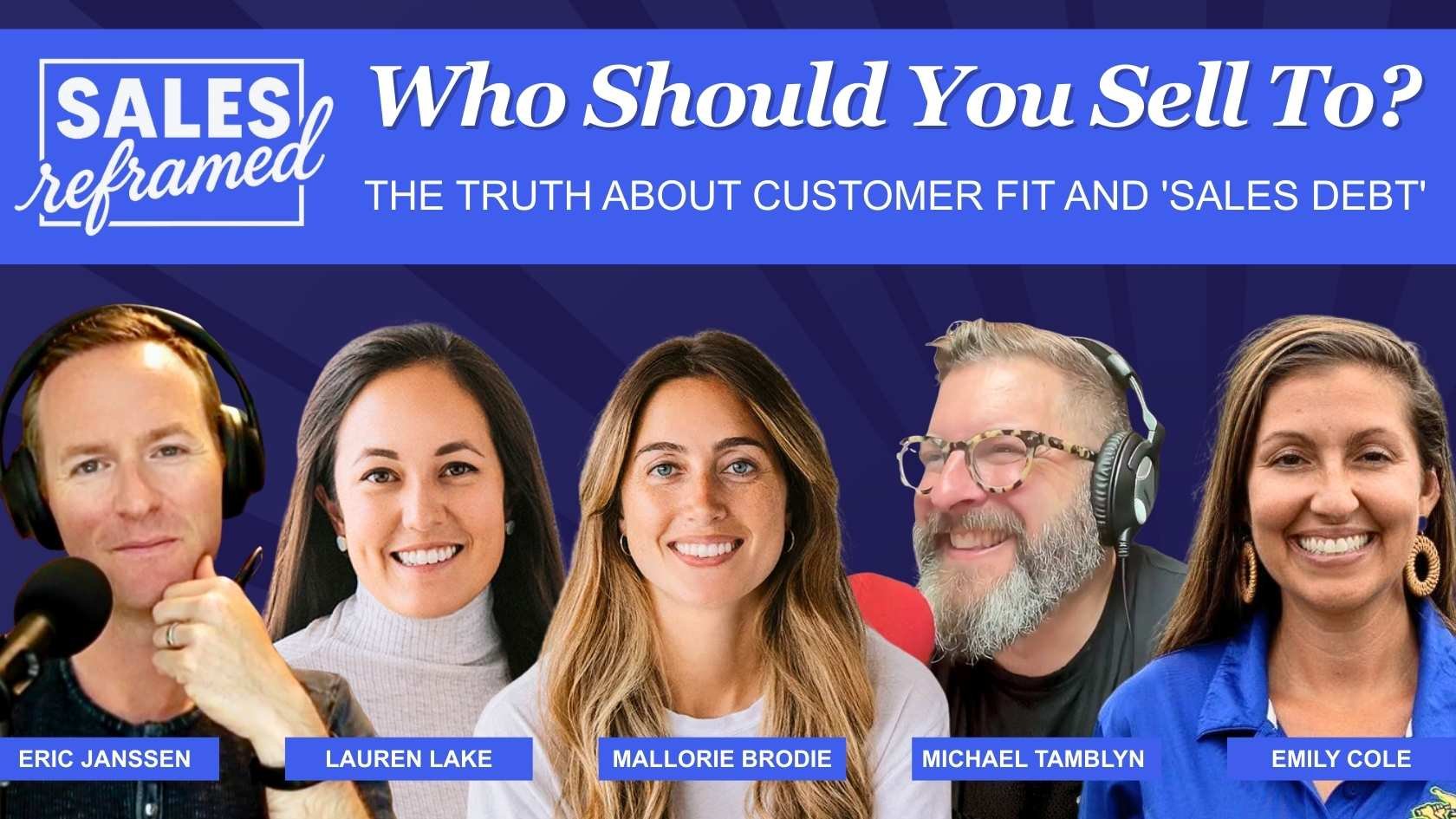
Eric Janssen teaches sales and entrepreneurship at the Ivey Business School at Western University. He is the founder of the Founder Sales Sprint and host of the Sales Reframed podcast, where he interviews Michael Tamblyn in Episode 7.